

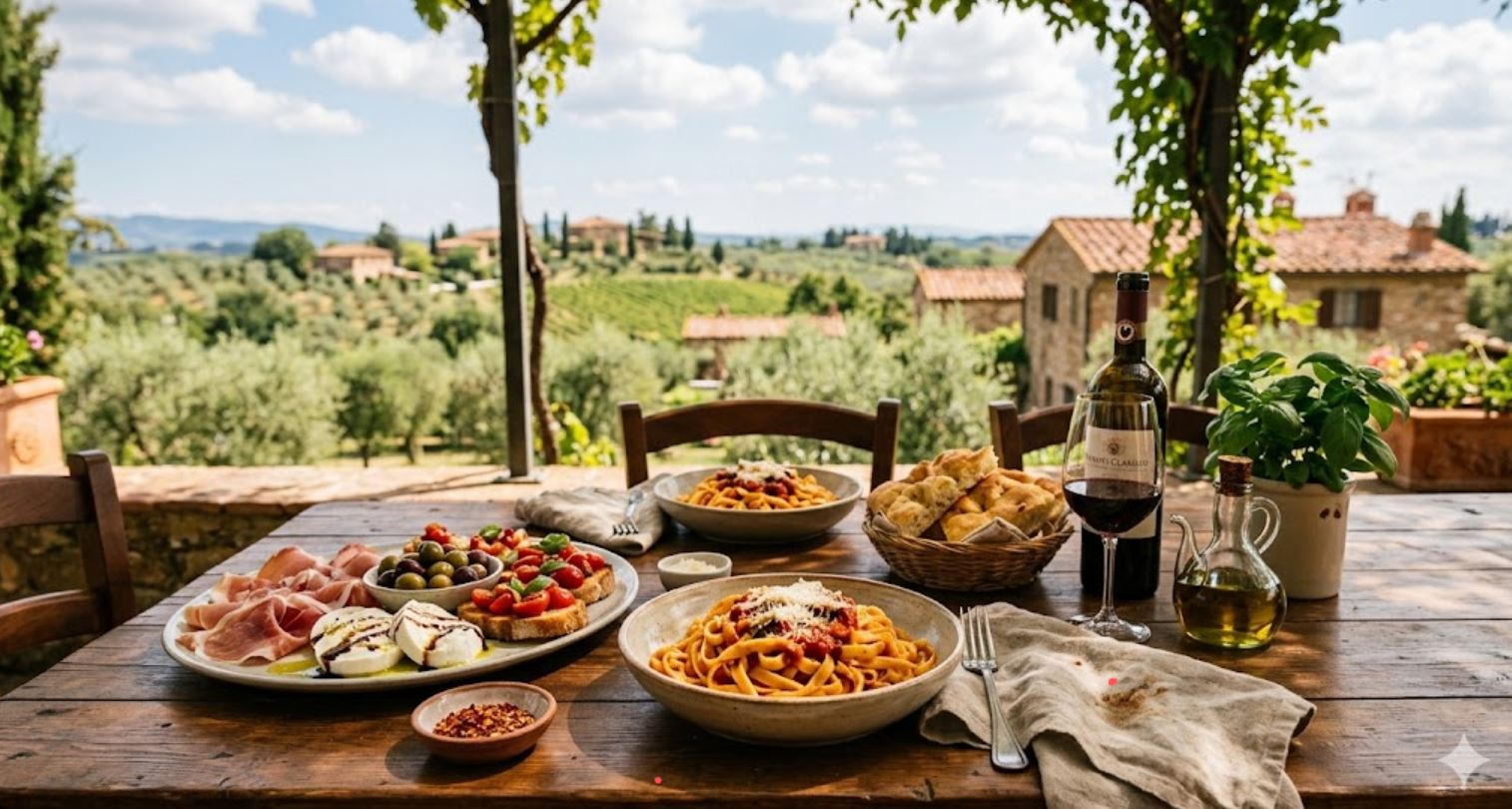
Italian cuisine is arguably one of the most beloved and internationally recognized food cultures in the world. Often characterized by its vibrant flavors, comforting textures, and rich history, the true essence of Italian cooking lies in its profound simplicity. Unlike culinary traditions that rely on complex techniques and long lists of ingredients, Italian food celebrates the quality of the raw materials themselves.
The Philosophy of Simplicity
At the heart of Italian cooking is the concept of cucina povera (peasant cooking). This philosophy dictates that every ingredient should be fresh, seasonal, and of the highest possible quality. An authentic Italian dish rarely contains more than four to eight ingredients. The goal is not to mask flavors with heavy sauces, but rather to allow the natural taste of the food to shine through.
A Tapestry of Regional Flavors
While the world often views “Italian food” as a single entity, Italy is actually a patchwork of distinct regional cuisines, heavily influenced by geography and history.
- Northern Italy: Characterized by the use of butter, cream, mascarpone, and Parmigiano-Reggiano. The cooler climate favors hearty dishes like rich risottos (rice) and polenta (cornmeal), rather than dried pasta.
- Central Italy: Known for its robust and earthy flavors. This region is famous for olive oil, sheep’s milk cheeses (like Pecorino), cured meats, and wild boar. Tuscany and Rome boast some of the country’s most famous dishes, including Bistecca alla Fiorentina and Pasta alla Carbonara.
- Southern Italy: The birthplace of the globally iconic pizza. The sunny, Mediterranean climate produces an abundance of tomatoes, olive oil, garlic, capers, and citrus fruits. Seafood is a staple, and dried pasta is deeply ingrained in the daily diet.
Essential Ingredients
Regardless of the region, certain pantry staples form the backbone of the Italian kitchen:
- Extra Virgin Olive Oil: Used for cooking, finishing dishes, and dipping.
- Tomatoes: Essential for sauces, stews, and salads, particularly the famous San Marzano variety.
- Garlic and Onions: The foundational aromatics for countless recipes.
- Fresh Herbs: Basil, oregano, rosemary, and sage are used generously to brighten flavors.
- Cheese: From the sharp bite of Pecorino Romano to the creamy texture of fresh Mozzarella di Bufala, cheese is both an ingredient and a garnish.
The Anatomy of an Italian Meal
In Italy, eating is an event to be savored with family and friends, not something to be rushed. A traditional Italian dinner consists of several structured courses:
- L’Antipasto: “Before the meal.” Small, appetizing bites like bruschetta, cured meats, or marinated vegetables.
- Il Primo: The first course, typically consisting of a hot carbohydrate dish like pasta, risotto, or soup.
- Il Secondo: The main course, usually meat, poultry, or fish. It is often served simply, without heavy sides.
- Il Contorno: The side dish, usually a salad or cooked seasonal vegetables, served alongside the secondo.
- Il Dolce: The dessert, ranging from fresh fruit to decadent treats like Tiramisu or Panna Cotta.
- Caffè e Digestivo: An espresso followed by a small glass of liqueur (like limoncello or grappa) to aid digestion.