
If you are looking for a white wine that is synonymous with freshness, lightness, and sunny afternoons, look no further than Pinot Grigio. As one of the most popular white wines globally, it is the perfect choice for those who enjoy vibrant, easy-drinking, and uncomplicated beverages.
Here is everything you need to know about this fascinating and refreshing grape variety.
A Glimpse into its History and Origin
Although the name “Pinot Grigio” sounds undeniably Italian, this grape actually has its roots in France, where it is known as Pinot Gris. Surprisingly, it is a genetic mutation of the famous red grape Pinot Noir. In fact, the word “Pinot” comes from the French for “pinecone” (due to the way the grape clusters grow in a tight, cone-like shape), and “Grigio” or “Gris” means “grey,” referring to the greyish-blue hue the grape skin acquires as it ripens.
While the French cultivated the grape in regions like Alsace to produce rich, textured, and full-bodied wines, it was the Italians (especially in northern regions like Veneto, Friuli, and Trentino) who popularized the light, dry, and crisp style that the whole world knows and loves today.
Flavor Profile and Characteristics
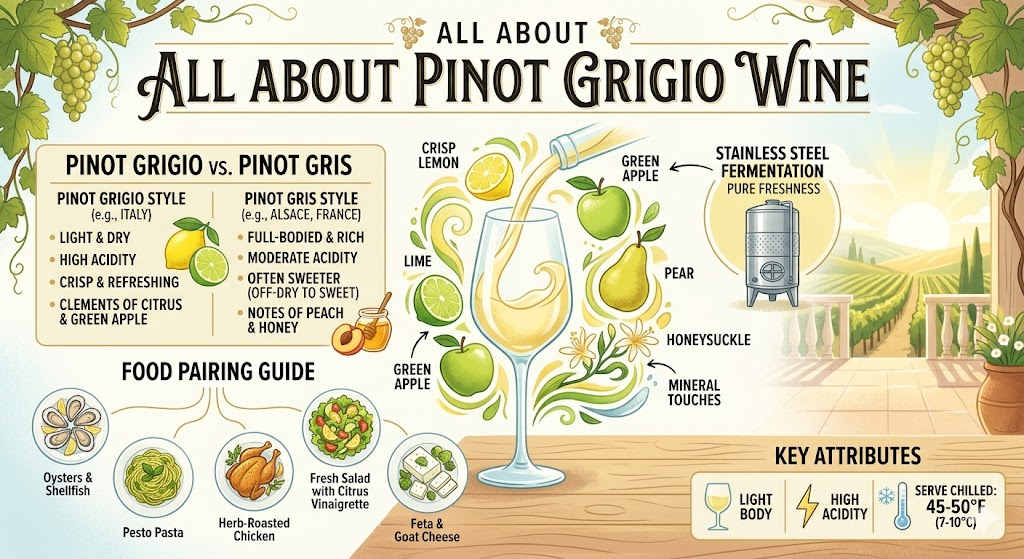
Pinot Grigio is characterized by its zippy acidity and the absence of oak flavors, as it is almost always fermented and aged in stainless steel tanks to preserve its pure, bright freshness.
When you pour a glass, you can expect:
- Citrus and fruit aromas: Vibrant notes of lemon, lime, green apple, and crisp pear.
- Floral and mineral touches: Light aromas of white flowers, honeysuckle, or a subtle mineral salinity, depending on where the grapes were grown.
- Light body: It is a wine that does not overwhelm the palate, making it incredibly refreshing and easy to drink.
Sommelier’s Tip: To enjoy a Pinot Grigio at its absolute best, serve it well-chilled, between 45°F and 50°F (7°C – 10°C). At this temperature, its bright acidity shines perfectly without masking its delicate fruity aromas.
The Great Debate: Pinot Grigio vs. Pinot Gris
Although they are the exact same grape, the label on the bottle usually tells you the style of wine you are about to drink. Winemakers worldwide use these names to indicate the stylistic choices they made in the cellar.
| Characteristic | Pinot Grigio Style (Italy) | Pinot Gris Style (France/Alsace) |
| Body | Very light and crisp. | Medium to full, with a richer, almost oily texture. |
| Primary Flavors | Lemon, lime, green apple, minerality. | Peach, apricot, honey, baking spices, and ripe fruit. |
| Acidity | High and refreshing. | Moderate to low. |
| Sweetness Level | Bone dry. | Can range from bone dry to slightly sweet (Off-dry). |
Perfect Pairings
Due to its light profile and high acidity (which acts as an excellent palate cleanser), Pinot Grigio is an incredibly versatile food wine. It is the ideal companion for light, fresh dishes that will not overpower the delicate flavor of the wine.
- Seafood and Fish: Ceviche, fresh oysters, fried calamari, or a baked white fish fillet squeezed with fresh lemon.
- Light Pastas: Spaghetti alle vongole (with clams), fresh pesto pasta, or simple olive oil and garlic-based sauces.
- Poultry and Vegetables: Crisp summer salads with citrus vinaigrettes, herb-roasted chicken, or dishes featuring asparagus and zucchini.
- Cheeses: Fresh, soft cheeses like mozzarella, burrata, feta, or a mild goat cheese.